Applications > Electronic Shelf Label (ESL)
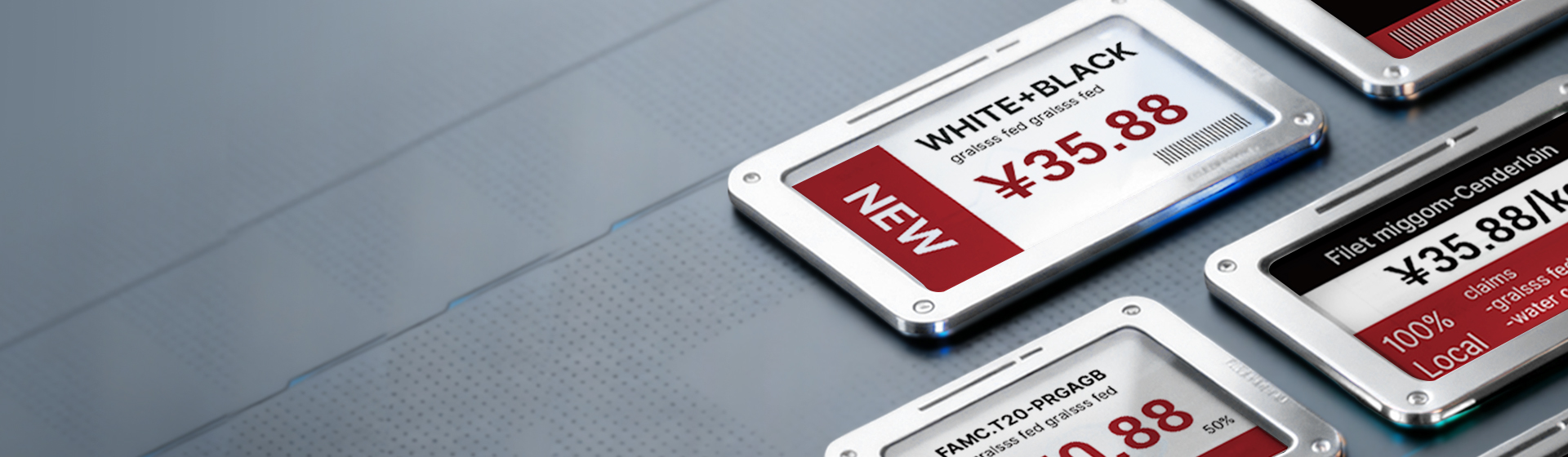

Electronic Shelf Labels (ESLs) have been available in the market for many years and have evolved into high-quality, multifunctional IoT platforms that simultaneously offer numerous advantages in customer interface and back-end operations through price and product information displays. There is an enormous potential market with billions of labels that could be utilized across various environments, including retail, warehousing, and healthcare sectors.
Realtek's ESL Solution offers competitive hardware costs and provides diverse demo applications based on IEEE 802.15.4, 2.4G Proprietary, and BLE technologies. This ensures compatibility with existing ESL products and offers significant advantages in seamless integration and ESL system construction.
Over the past few years, awareness of the benefits of ESL adoption has rapidly expanded. Major ESL suppliers have reported record unit and revenue growth, large-scale deployments across multiple industries, the emergence of new market entrants, and increased penetration in regions that have traditionally been hesitant to adopt these solutions.
In response to retailers' demands for digitizing retail operations, the recent introduction of the Bluetooth® electronic price label (ESL) standard is likely to further accelerate market growth. This development aligns with the retail industry's push towards more efficient and dynamic pricing systems, potentially opening up new opportunities and applications in the ESL market.
System Structures
Typical ESL involves the following main components:
1. Display: Usually uses E-ink technology due to its low power consumption and readability in various lighting conditions.
2. Wireless MCU: Controls display. Updating price and goods information.
3. Battery: Typically utilizes coin batteries that can support operations for several years.
4. Data encryption: Ensures the security of price information.
ESL technology is continually evolving, with new display technologies, more efficient wireless communication methods, and smarter management systems being developed and applied to improve efficiency and customer experience in retail environments.

Application Scenarios

Advantages of Solution

The Realtek platform features ultra‑low power consumption to significantly extend ESL battery life, and supports BLE, IEEE 802.15.4 and 2.4 GHz proprietary RF technologies to meet diverse communication requirements across different application scenarios.

The Realtek platform offers a rich set of peripheral interfaces that not only meet diverse system and feature design requirements, but also allow devices to adapt flexibly to different usage scenarios through default‑enabled low‑power features such as DLPS mode, while maintaining long battery life.

1. A full SDK that supports multiple communication technologies between gateways and tags.
2. A well‑balanced system architecture with an ultra‑low‑power platform design, suitable for long‑running retail deployments.
3. Predefined command sets that simplify communication between the host controller and the gateway.
4. Comprehensive sample code provided by Realtek helps customers quickly get started with Realtek’s RF solutions.

The Realtek platform is continuously improving, and upcoming generations will integrate Channel Sounding technology to enhance indoor positioning capabilities for ESLs and further expand application scenarios. At the same time, Realtek will continue to provide cost‑competitive solutions that balance performance, features, and total cost of ownership for customers.

Realtek offers a wide range of IC families and diverse packaging options, providing the flexibility to meet the requirements of various applications and enabling customers to integrate them into multiple product designs.
Industry Solutions
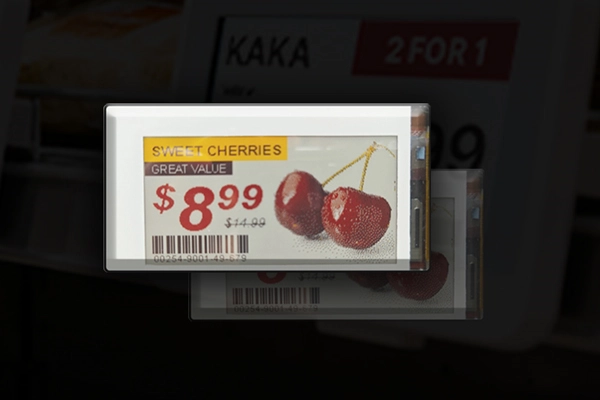
E Ink and Realtek Semiconductor launch the SoP+COG e-paper solution with deep RF-display integration, 50% smaller FPC, ultra-low power and outstanding carbon reduction. It wins innovation awards and will enter mass production in 2026.
Start Implementing My ESL Application
Implementing multiple RF communication interfaces and developing low-power ESL electronic tags.
Select hardware platforms and package types that support the required RF communication protocols for the project, such as 2.4G Proprietary, IEEE 802.15.4, Bluetooth BLE, and PAwR. At the same time, evaluate the number of external peripheral devices that need to be connected and choose IC packages with sufficient I/O pins to accommodate them. Additionally, select the most suitable hardware development platform based on the computational performance, SRAM resources, and power consumption requirements of the application scenario, ensuring optimal system performance and resource allocation
Choose the most suitable platform using the Hardware Selection Table provided by RealMCU, and evaluate performance through the Realtek development board.
Hardware reference links: RTL8752H HDK RTL8762E HDK
Quickly integrate and test required features using the rich communication functions and hardware interface examples provided by the Realtek SDK.
SDK reference links: RTL8752H SDK RTL8762E SDK
Realtek offers comprehensive RF validation and mass production tools to help quickly bring products to mass production.
Recommended Chips
| RTL8762ESL | RTL8752HJL | |
|---|---|---|
| MCU | CM0+ 40MHz | CM0+ 40MHz |
| Flash | 512KB/1MB | 512KB/1MB |
| SRAM | 104KB | 120KB |
| Protocol | BLE5.2 2.4G Proprietary | BLE5.4 2.4G Proprietary IEEE 802.15.4 |
| Tx Power | 7.5dBm | 7.5dBm |
| Max RF Phy | 2M bit | 2M bit |
| Security | SHA-256 AES-128/256 TRNG | SHA-256 AES-128/256 TRNG |
| GPIO (max) | 26 | 26 |
| I2C | 2 | 2 |
| UART | 2 | 3 |
| DLPS | ~3.9uA | ~1.3uA |
| Package (mm) | QFN40, 5×5 | QFN40, 5×5 |




 苏公网安备32059002006558号