Applications > Smart Record Pen
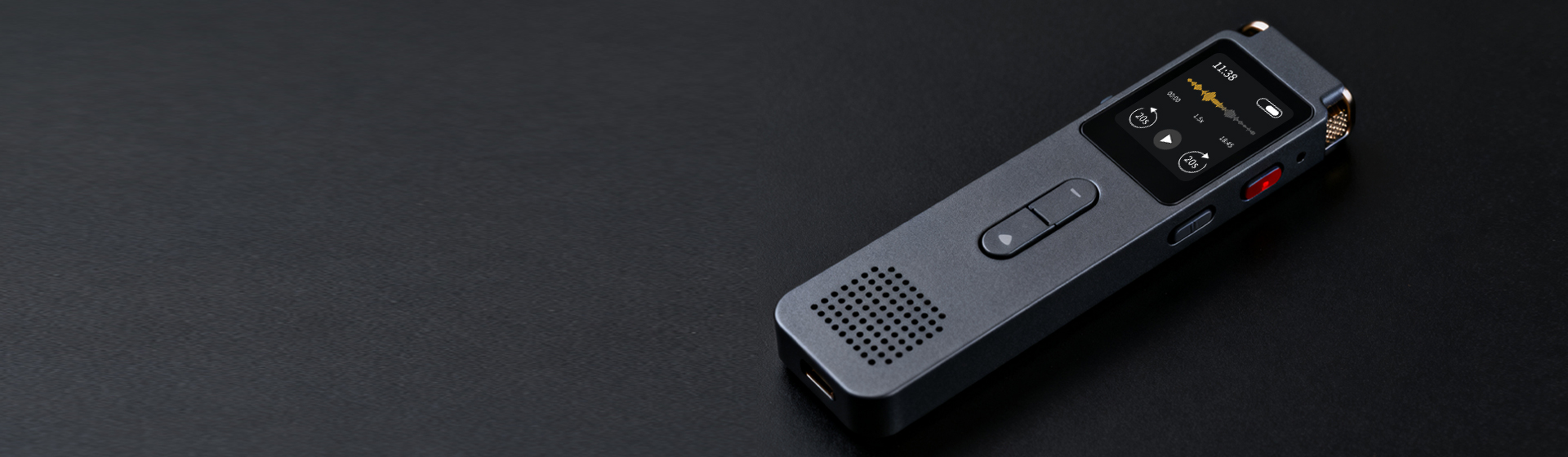

Realtek has launched its latest smart record pen solution, which is compatible with Bluetooth® Core 5.4 standard, supporting both Classic Bluetooth and Bluetooth Low Energy, and enabling WiFi expansion. This solution adopts a high-performance MCU and DSP, which can flexibly manage wired and wireless connections, efficiently process audio algorithms, and meet various requirements such as wireless audio transmission, recording, and storage. Meanwhile, it features functions including MIC recording, A2DP music recording, HFP call backup, and WiFi fast transmission. In addition, the solution integrates abundant input and output peripheral interfaces, including MIC, USB, SDIO, SPI, and I2S, further expanding the scope of application scenarios.
System Structures
Smart record pen integrates Bluetooth and WiFi chips, supporting multiple application scenarios such as local MIC recording, music recording, Bluetooth calls, and file storage. The expandable WiFi chip adopted in this solution supports 2.4G and 5G dual-band transmission, enabling high-speed transfer of recording files to the cloud or mobile APPs.

High-end version of smart record pen is equipped with more powerful MCU and DSP, supporting multi-channel MIC recording and touchscreen display functions. It also allows transplantation and expansion of third-party algorithms, thereby significantly improving recording quality and user interaction experience.

Application Scenarios

Advantages of Solution

It supports built-in noise reduction algorithms and allows integration of third-party algorithms, significantly improving MIC recording quality.

It supports low-power Bluetooth for real-time recording and high-speed WiFi for file transmission. The two chips work in synergy to flexibly adapt to various application scenarios.

It supports functions such as MIC recording, A2DP music recording, HFP call backup, and WiFi fast transmission, greatly expanding the device’s application scenarios.

A fully functional SDK development package is provided, including multiple product prototype projects, a mobile APP SDK, and OTA tools. This reduces customers’ development workload and accelerates project implementation.
Start Implementing My Smart Record Pen Application
Clarify functional and performance specifications of the smart record pen through comprehensive analysis of target user demographics and market positioning, establishing clear guidelines for subsequent development.
Select suitable chip solutions based on the target user's needs, and comprehensively evaluate their computational performance, power consumption, cost-effectiveness, and supply chain stability.
Design the software architecture of smart record pen with modular principles and interface protocols to ensure operational efficiency, maintainability, and scalability.
Collaborate with hardware engineers on circuit and PCB development, optimizing physical layout and thermal management while adhering to Design for Manufacturing (DFM) and assembly requirements.
Hardware reference links: RTL8763E HDK
Implement and optimize code on the hardware platform to guarantee functional completeness and system robustness, with provisions for maintainability.
SDK reference links: RTL8763E SDK
Conduct multi-level verification (unit/integration/system testing) to identify and resolve defects, ensuring final deliverables meet reliability benchmarks.
Build engineering prototypes for scenario-based testing, collect user feedback for iterative refinement, and complete full-process validation prior to mass production.
Recommended Chips
| RTL8763EW-VC | |
|---|---|
| MCU | Real-M300@100MHz |
| DSP | HiFi mini@200MHz |
| MCM Flash | N |
| SRAM | 532KB |
| Bluetooth Version | BR/EDR + LE Audio + BLE 5.3 |
| Display Interface | I8080, QSPI |
| MIC Resource | 3A + 4D |
| GPIO (max) | 80 |
| SDIO | Y |
| USB | Y |
| Operation Temperature | 0~70°C |
| Package (mm) | BGA149, 7×7 |




 苏公网安备32059002006558号