Applications > TWS
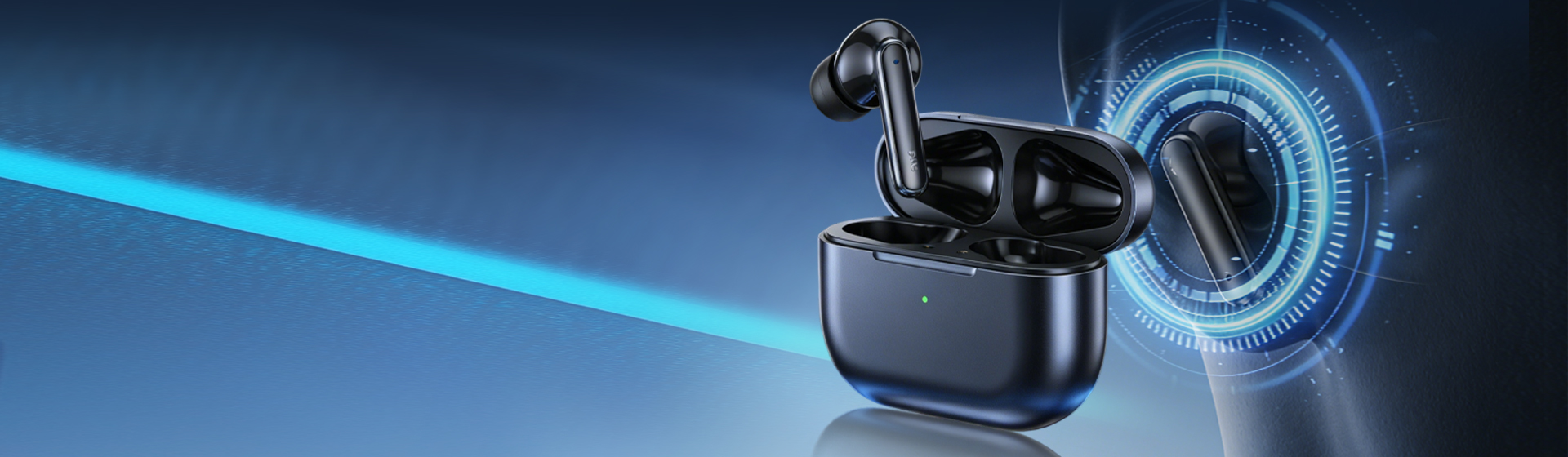

This solution is applicable to true wireless stereo (TWS) Bluetooth earphones, designed to free users from the constraints of wired connections. While delivering high-quality audio performance, it also expands possibilities for diversified interactions, thereby achieving an immersive and multi-functional user experience. Compatible with Bluetooth 5.0 and higher versions, the solution fundamentally mitigates latency and disconnection issues inherent to traditional wireless audio, ensuring low-latency playback with perfect audio-visual synchronization. By optimizing transmission technologies, it effectively minimizes audio quality loss, presenting users with delicate, full-bodied high-definition stereo sound. In addition, the solution features low power consumption, which significantly extends device battery life. It also supports seamless and rapid switching between multiple devices, catering to flexible usage requirements. Widely adaptable to diverse scenarios including home entertainment, sports and fitness, office meetings, and outdoor commuting, this solution fully meets users’ demands for premium wireless audio across different environments.
System Structures
Built on a lightweight design and high-definition audio quality, true wireless stereo (TWS) Bluetooth earphones feature a core advantage in the multi-link collaborative architecture of their Bluetooth connection system. Each type of link has a clear division of labor, adapting to different scenarios while also enabling efficient collaboration to form a complete transmission loop, thus delivering a low-latency, highly stable, and immersive audio experience for users.
Audio Link: The BR/EDR Link between the master earphone and the audio source acts as the core channel for audio and data transmission, reliably supporting music playback, voice calls, and data transfer to meet basic interaction requirements. The slave earphone monitors data from both the master earphone and audio source in real time, ensuring synchronized playback in active mode and eliminating audio latency.
Low-Power Bluetooth Link: The master earphone establishes a Bluetooth LE/LE Audio connection with the mobile APP, while the slave earphone establishes an LE Audio connection with the APP. The audio source separately connects to the master and slave earphones via LE Audio Link. The LE Audio Broadcast adopts a "audio source direct broadcasting + independent reception by master and slave earphones" mode, which effectively resolves the latency inconsistency issue inherent in traditional connection methods.
Binaural Collaborative Link: The master-slave role negotiation is completed through broadcasting and scanning during the "Engage" process, laying the foundation for subsequent connections. The BR/EDR Link is responsible for sending control commands, forwarding data between the two earphones, and recovering lost data on the slave earphone to ensure transmission integrity.
Device Management & Function Expansion: The master earphone communicates with the charging case via Bluetooth LE Link for control and information exchange, while both earphones and the charging case implement device management through 1Wire UART communication. The HTTPS connection between the audio source and cloud server provides value-added services such as AI functionality for the earphones, enabling continuous expansion of device capabilities.

Application Scenarios


Advantages of Solution

It supports multiple audio coding and decoding formats, delivering a high-fidelity audio experience suitable for various scenarios such as music playback, calls, and gaming. Some chips also integrate noise suppression and echo cancellation technologies to further enhance audio quality.

Equipped with comprehensive in-house self-developed algorithms, supporting ANC/APT/RHA/AEC/NR/RCV-NN/EQ and other technologies.

Adopting an advanced low-power architecture, some models support deep sleep mode and automatic wake-up functions. This enables true wireless stereo (TWS) earphones to further reduce power consumption while maintaining efficient audio processing capabilities, thereby extending the overall battery life.

Based on the Realtek chip-based Bluetooth connection solution, the true wireless stereo (TWS) earphones boast excellent signal transmission and reception capabilities, ensuring a stable connection with Bluetooth-enabled devices. With an operating distance of over 15 meters, they support connection penetration through walls, featuring strong anti-interference performance and low disconnection probability.

The chip adopts a highly integrated design, incorporating built-in modules such as Bluetooth RF (Radio Frequency), baseband processor, audio DAC/ADC (Digital-to-Analog Converter/Analog-to-Digital Converter), and power management unit (PMU). This design helps simplify peripheral circuits, reduce the demand for external components, thereby minimizing PCB (Printed Circuit Board) size and overall device volume while effectively lowering the total cost.

It supports Multi-link functionality, enabling simultaneous connection with two mobile phones and overcoming the limitation of traditional true wireless stereo (TWS) earphones that can only connect to one device at a time. Some solutions also feature gaming low latency, dual-microphone call noise cancellation, and transparency mode.

It supports multiple Bluetooth audio protocols including A2DP, AVRCP, and HFP, enabling compatibility with mainstream mobile phones and audio playback devices.

Comprehensive development support and reference designs are provided, helping reduce development complexity and significantly shorten the time required for products to move from design to market.
Recommended Chips
| RTL8763E & RTL8773ESL | RTL8773E | RTL8773D | |
|---|---|---|---|
| MCU | Real-M300 (CM33-like), 32-bit ARMv8M mainline processor@100MHz | Real-M300 + FPU (CM33-like), 32-bit ARMv8M mainline processor@100MHz | ARM Cortex-M4F@160MHz |
| DSP | Tensilica HiFi mini@200MHz | Tensilica HiFi mini@200MHz | Tensilica HiFi mini@320MHz + Tensilica HiFi4@320MHz |
| Flash | MCM 4MB/External | External | MCM 8MB/16MB |
| SRAM | 532KB shared SRAM | 800KB shared SRAM | DSP + MCU total 3MB |
| Bluetooth Version | Bluetooth 5.4 | Bluetooth 5.4 | Bluetooth 5.4 |
| BLE Audio | RTL8763EFL, RTL8763EAU, RTL8763EW-VP only | Y | Y |
| Max TX Power (BR) | 10dBm | 13dBm | 12.5dBm |
| A-MIC Number | ×3 | ×2 | ×4 |
| D-MIC Number | ×4 | ×4 | ×6 |
| SPK/DAC | Class D ×2 | DAC out ×1 | Class AB ×2 + Class D ×2 |
| AUXADC | 4 channels, 12bits | 4 channels, 12bits | 8 channels, 12bits |
| I2C | ×3 Master/Slave mode. Max data rate at 400Kbps. | ×3 Master/Slave mode. Max data rate at 400Kbps. | ×3 Master/Slave mode. Max data rate at 400Kbps. |
| UART | ×3 HW flow control. Max baud rate at 4MHz. | ×3 HW flow control. Max baud rate at 4MHz. | ×4 HW flow control. Max baud rate at 4MHz. |
| Operation Temperature | -20~70°C | -20~85°C | -20~70°C |
| Operation Voltage | 2.8~4.5V (VBAT) | 2.8~4.5V (VBAT) | 3~5V (VBAT) |
| Package (mm) | QFN50, 4×6 QFN40, 4×6 QFN68, 7×7 QFN76, 7×7 BGA149, 7×7 | QFN68, 7×7 QFN88, 10×10 | BGA184, 4.9×6 |




 苏公网安备32059002006558号