Bluetooth Profiles > HFP & PBAP
HFP & PBAP
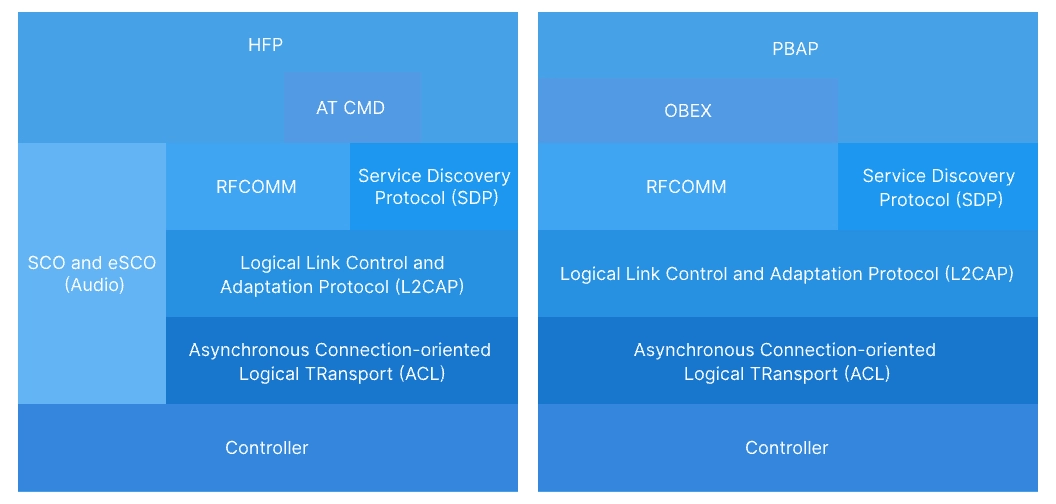
The Hands-Free Profile (HFP) is an application layer specification defined by the Bluetooth Special Interest Group (SIG) that supports wireless voice communication between devices. This profile transmits commands via RFCOMM channels and relies on SCO/eSCO channels for audio interaction.
The Phone Book Access Profile (PBAP), also defined by the Bluetooth SIG, is an application layer profile used for accessing phone book and contact information between devices. It employs a client/server architecture, with data transmitted in vCard format.
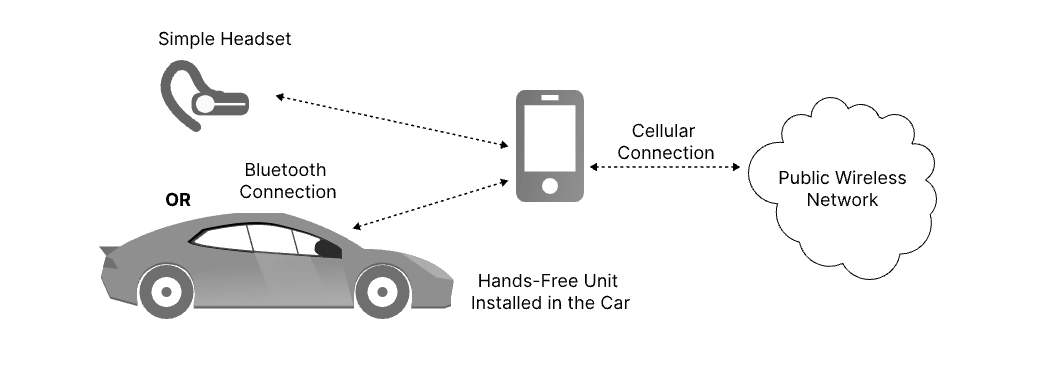
Two roles are defined in HFP:
1. Audio Gateway (AG) - Acts as the gateway device for audio input and output, with typical devices being mobile phones.
2. Hands-Free Device (HF) - Responsible for connecting to the audio gateway, providing hands-free audio functionality, and enabling remote control of the audio gateway.
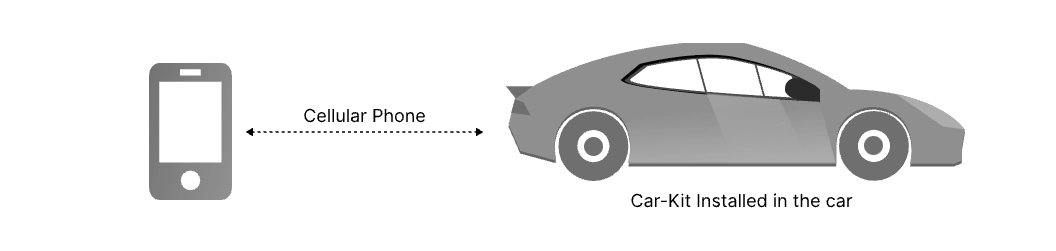
Two roles are defined in PBAP:
1. Phone Book Server Equipment (PSE) - Serves as the storage and provider of source phone book objects.
2. Phone Book Client Equipment (PCE) - Responsible for retrieving and obtaining phone book objects from the PSE.
Application Scenarios of HFP & PBAP Technology
HFP and PBAP are highly coordinated, with their core application scenarios centered around hands-free calling and contact data synchronization, primarily covering areas such as automotive systems, wearable devices, and smart home technology. This collaborative solution aims to free users' hands, enhancing operational safety and convenience. The specific application scenarios are as follows:
Intelligent Vehicle Cockpit
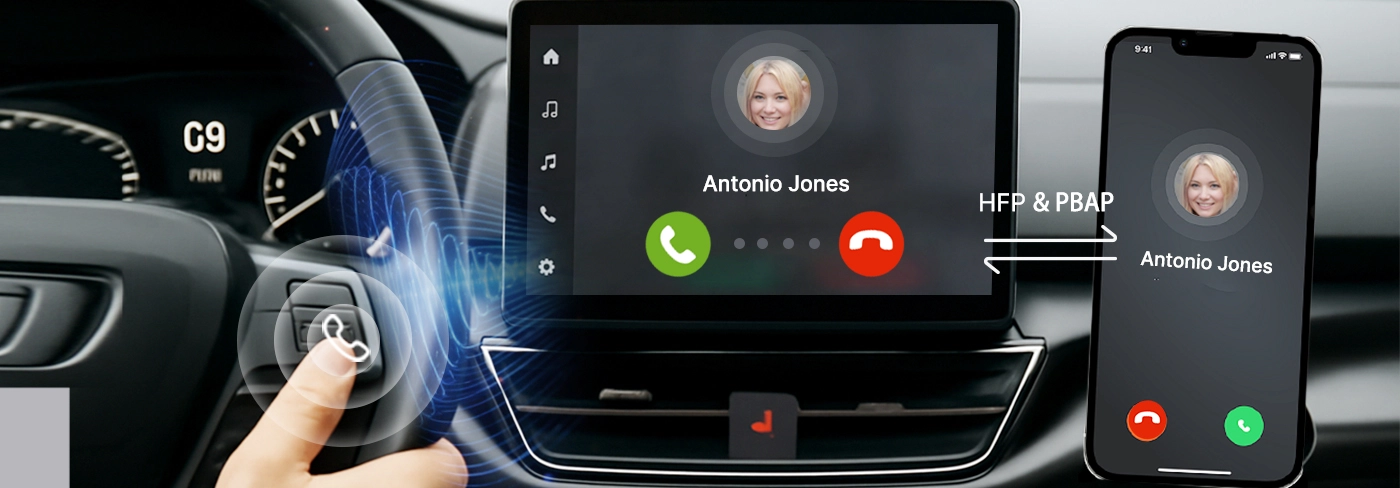
The intelligent vehicle cockpit is the most typical collaborative application scenario for HFP and PBAP profiles, primarily addressing the need for call safety and operational convenience in driving situations. The implementation involves the car's main unit establishing a voice communication link with the phone via the HFP profile, allowing operations such as answering and hanging up calls through steering wheel buttons or touchscreen controls on the central console. It also synchronizes and displays phone signal, battery status, etc., with call audio transmitted through the car's speakers and microphone, achieving hands-free calls throughout. Additionally, upon user authorization, the system obtains contact information and call records from the phone via the PBAP profile, directly displaying the caller's name and number on the central console screen. It supports searching and calling by name, effectively avoiding the safety risks associated with manually operating the phone while driving.
Bluetooth Headphones
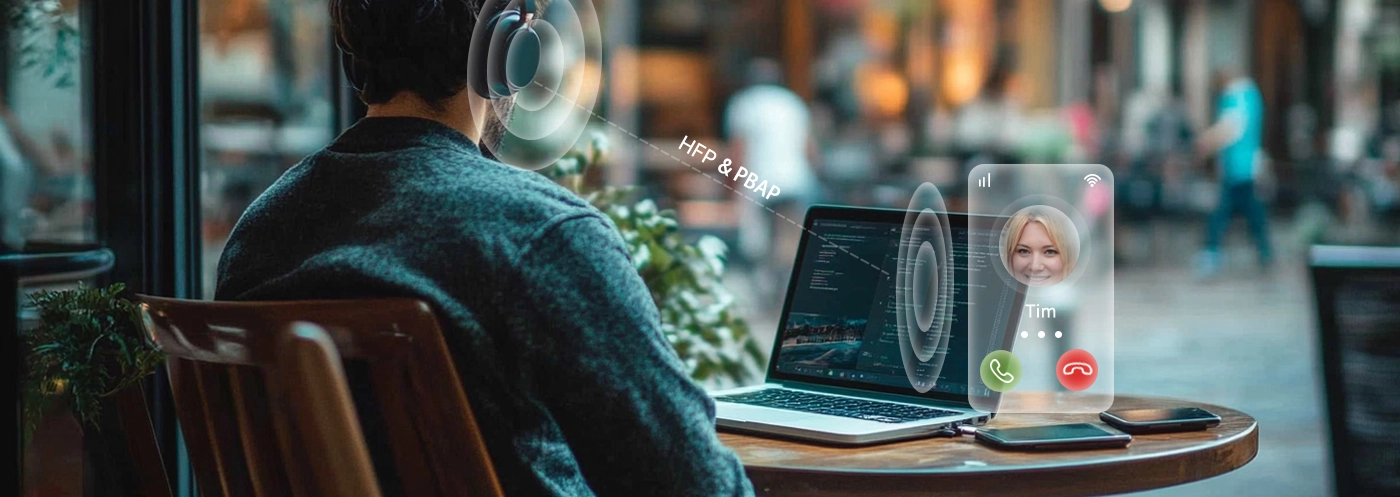
Bluetooth headphones are a typical application of HFP and PBAP profiles in personal mobile scenarios, primarily providing a lightweight hands-free calling experience without the need for phone operation. The specific implementation is as follows: the headphones connect to the phone via the HFP profile, allowing call answering and hanging up through touch or button controls. Some headphones use wideband voice (mSBC) encoding to enhance call clarity and incorporate noise reduction features to adapt to various scenarios such as commuting and office work. Additionally, headphones supporting the PBAP profile can read phone contact information and announce the caller's name through text-to-speech (TTS) functionality. Some business headsets can also synchronize contacts to local storage on the headphones, enabling users to directly call frequently used contacts via voice commands even when the phone is not within close proximity.
Smart Wearable Devices
Smart wearable devices serve as extension terminals for phones, enabling lightweight call functionalities and quick access to contacts through HFP and PBAP. The specific implementation involves pairing the device with the phone via the HFP profile, allowing users to answer calls, hang up, and perform voice dialing directly from the watch interface. After synchronizing phone contact information, the device can display the caller's name directly on the watch face and supports quick search and one-touch dialing, enabling users to conveniently make calls without operating the phone during activities like exercising or commuting.

Smart Home Devices
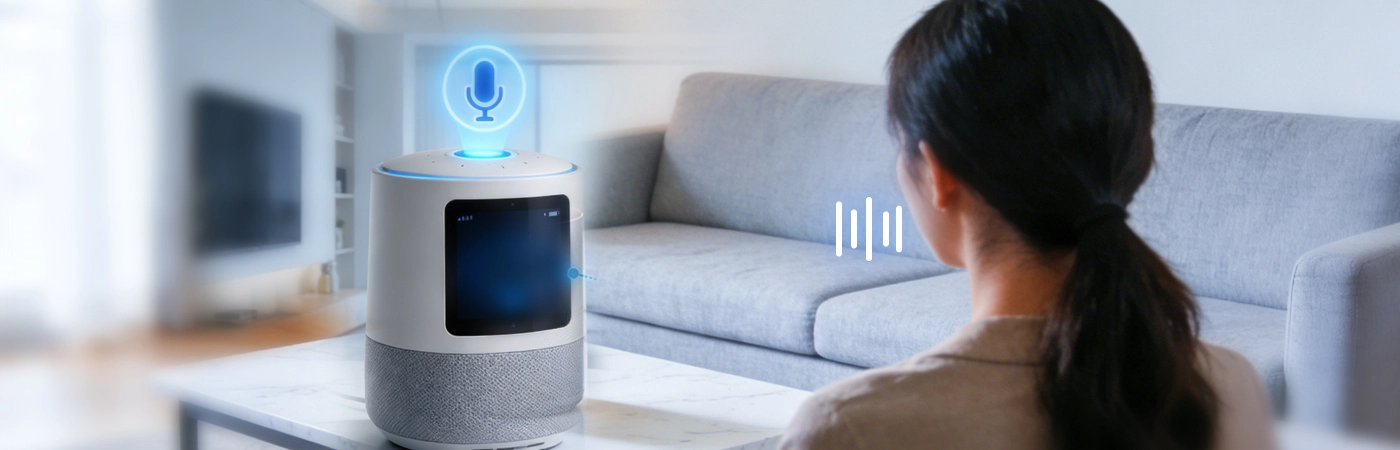
Smart home devices leverage the advantage of voice interaction in domestic settings to achieve contactless hands-free calling through HFP and PBAP. The specific implementation involves the device establishing a connection with the phone via the HFP profile, allowing call operations to be controlled through voice commands. It utilizes the device's built-in multi-microphone array for far-field voice pickup, suitable for various home environments such as the living room and kitchen. After synchronizing phone contact information, users can directly call contacts via voice. Smart control devices equipped with screens can also display contact lists and call records, catering to the needs of different user groups, including the elderly and children.
Special Scenario: Walkie-Talkie and Portable Terminal
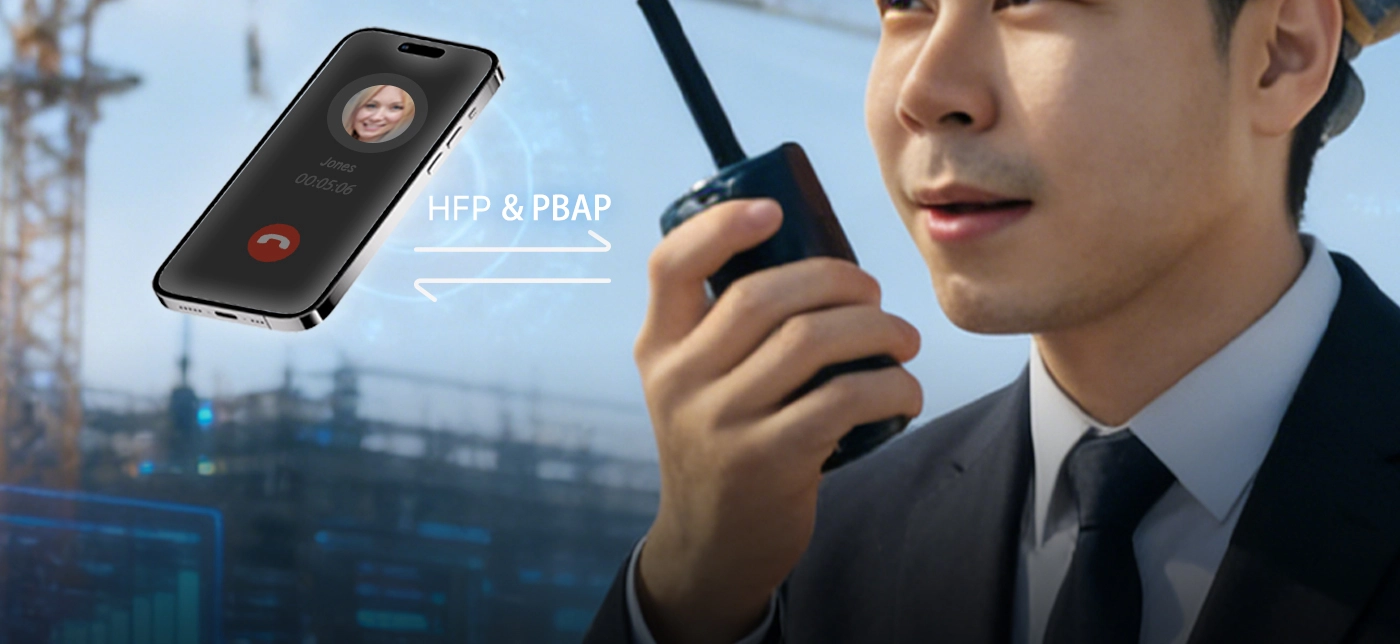
Walkie-talkies and portable terminals are designed for professional and outdoor scenarios, enabling device connectivity and data sharing through HFP and PBAP. The specific implementation is as follows: the device connects to the phone via the HFP profile, allowing phone call audio to be transmitted to the walkie-talkie, utilizing the walkie-talkie's high-power speaker to adapt to noisy outdoor environments. After synchronizing phone contact information, users can directly select contacts from the list to initiate calls without manually entering numbers, thereby effectively enhancing outdoor operation and communication efficiency.




 苏公网安备32059002006558号