Products > Dual-Mode BT > Overview

Dual-Mode BT
Dual-Mode BT

Realtek's Dual-Mode BT SoC series is a single-chip solution that integrates RF, PMU, CODEC, USB, high-performance CPU, and DSP, while also providing a rich set of IO interfaces. It boasts powerful computational capabilities, supports multiple algorithms, and simultaneously supports dual-mode Bluetooth (classic Bluetooth and Bluetooth Low Energy) as well as BLE audio technology, providing users with stable and reliable wireless transmission. For applications that require high-speed data transmission and low-power, small data transmission, the SoC series offers flexibility and reliability.

The SoC series finds wide applications in various fields that require wireless connectivity, audio processing, and image display functions, such as open wireless earphones (OWS), stereo headphones, gaming headphones, speakers, wearable devices, charging cases with smart screens, and smart dashboards, among others. Realtek also meets the diverse needs of different customers by offering differentiated solutions in terms of package size, GPIO count, SDK tools, audio algorithms, image processing algorithms, power management, and amplifiers.

With its high integration, strong computational capabilities, stable and reliable wireless transmission, and flexibility, the SoC series provides users with high-performance solutions in various application domains.

Product Comparison

MCU
Real-​M300 (CM33-​like), 32-​bit ARMv8M mainline processor@100MHz
Real-​M300 + FPU (CM33-​like), 32-​bit ARMv8M mainline processor@100MHz
ARM Cortex-​M4F@160MHz
ARM Cortex-​M55 + FPU + MVE @200MHz
ARM Cortex-​M33 + FPU @200MHz ARM Cortex-​M55 +FPU + MVE @200MHz
DSP
Tensilica HiFi mini@200MHz
Tensilica HiFi mini@320MHz + Tensilica HiFi4@320MHz
Tensilica HiFi mini@260MHz
Dual Tensilica HiFi 1s@360MHz
Flash
MCM 4MB/​External
External
MCM 8MB/​16MB
MCM 4MB/​External
MCM 10MB
MCM 4MB/​8MB/​16MB
SRAM
532KB shared SRAM
800KB shared SRAM
DSP + MCU total 3MB
928KB shared SRAM
1.3MB SRAM
total 2MB, 1MB configurable
PSRAM
0/​MCM 4MB (RTL8763EW-​VP)
0/​MCM 4MB/​MCM 8MB
0
0/​MCM 4MB/​MCM 8MB
MCM 16MB
0/​MCM 8MB
2D/​2.5D Engine
N
Y
N
RTL8773G only
Y
N
IDU (Image Decompressor Unit)
N
Y
N
RTL8773G only
Y
N
Bluetooth Version
Bluetooth 5.4
Bluetooth 5.4
Bluetooth 5.4
Bluetooth 6.0
Bluetooth 6.0
Bluetooth 6.0
PAwR
N
Y
N
Y
Y
Y
HDT
N
N
N
N
N
Y
BLE Audio
RTL8763EFL, RTL8763EAU, RTL8763EW-​VP only
Y
Y
Y
Y
Y
Max TX Power (BR)
10dBm
13dBm
12.5dBm
13dBm
13dBm
15dBm
RX Sensitivity (BR)
-​94.5dBm
-​95.8dBm
-​96dBm
-​95.5dBm
-​95.5dBm
-​97dBm (LNA setting 2)
15.4 Zigbee/​Thread
N
N
N
Y
Y
N
2.4G Proprietary
N
N
N
Y
Y
Y
WiFi
N
N
N
N
Y, 2.4GHz
N
Display Interface
I8080 (RTL8763EWE/​RTL8763EW series), QSPI (50MHz)
I8080, QSPI (60MHz), RGB888
N
I8080, QSPI (70MHz), RGB888
QSPI (50MHz)
Display Format
RGB565
RGB888, RGB565
N
RGB888, RGB565
RGB888, RGB565
NA
Display Resolution
454×454, 16bits, 60fps
466×466, 16bits, 60fps or 800×480, 16bits, 30fps
N
466×466, 16bits, 60fps or 800×480, 16bits, 30fps
640×480, 4bits, 25-​125Hz refresh rate
RAMless LCD
N
Y
N
Y
Y
N
JPEG
N
N
N
Y, encoder and decoder
N
Security Boot
Y
Y
Y
Y
Y
Y
TrustZone
N
N
N
N
N
N
TRNG
Y
Y
Y
Y
Y
Y
AES-​128/​256
Y
Y
Y
Y
Y
Y
SHA-​256
N
Y
Y
Y
Y
Y
SM3 Encryption
N
Y
N
Y
Y
N
A-​MIC Number
×3
×2
×4
×2
×2
×3
D-​MIC Number
×4
×4
×6
×4
×4
×10
Line-​in
2 channels
2 channels
2 channels
2 channels
2 channels
2 channels
SPK/​DAC
Class D ×2
DAC out ×1
Class AB ×2 + Class D ×2
Class D ×2 or DAC out ×2
Class D ×2 + DAC out ×2
I2S
×2 Formats: I2S, Left-​justified, PCM mode-​A, PCM mode-​B. Application sampling rate: Up to 192KHz. Master and slave mode. No master clock (MCLK) output.
×4 Formats: Left-​justified, right-​justified, PCM mode-​A, PCM mode B. Application sampling rate: Up to 192KHz. Master and slave mode. Support master clock (MCLK) output.
×2 Formats: I2S, Left-​justified, PCM mode-​A, PCM mode-​B. Application sampling rate: Up to 192KHz. Master and slave mode. Support master clock (MCLK) output.
×4 (Tx × 4 +  Rx × 4) Formats: Left-​justified, right-​justified, PCM mode-​A, PCM mode B. TDM mode Application sampling rate: Up to 192KHz. Master and slave mode. Support master clock (MCLK) output.
ANC
Hybrid
N
Hybrid
N
N
Hybrid Adaptive ANC dual FF + FB Hybrid ANC
GPIO
9/​12/​15/​38/​39/​80
39/​57
50
37/​40
75
13/​16/​30
AUXADC
4 channels, 12bits
4 channels, 12bits
8 channels, 12bits
4 channels, 12bits
8 channels, 12bits
8 channels, 12bits
I2C
×3 Master/​Slave mode. Max data rate at 400Kbps.
×4 Master/​Slave mode. Max data rate at 1Mbps.
PWM
×8
×12
×16
×12
×12
×12
UART
×3 HW flow control. Max baud rate at 4MHz.
×4 HW flow control. Max baud rate at 4MHz.
×6 HW flow control. Max baud rate at 4MHz.
×3 HW flow control. Max baud rate at 4MHz.
SPI
×3  SPI0: Master + Slave role SPI1: Master only SPI2: Master only
×3 SPI0: Master + Slave role SPI1: Master only SPI2: Master only
×4 SPI0: Masteronly SPI1: Master only SPI2: Master only SPI_​SLV slave only
SDIO
×1 (RTL8763EWE/​RTL8763EW series)
×1
×1
×2
×2
×2
USB
USB 2.0 (RTL8763ESE, RTL8763EAU and RTL8763EW-​VC only )
N
USB 2.0
USB 2.0 HS, Host or Device
USB 2.0 (depends on part numbers)
SPDIF
N
N
Y
N
N
Y
SLEEP LED
Y
N
Y
Y
Y
Y
SPIC
×2 (RTL8763EWM, RTL8763EWE series) ×4 (RTL8763EW series)
×2
×3
×4
×4
×3
CAN Bus
N
Y
N
Y
Y
N
Operation Temperature
-​20~70°C
-​20~85°C
-​20~70°C
-​20~85°C
-​20~85°C
-​20~70°C
Operation Voltage
2.8~4.5V (VBAT)
2.8~4.5V (VBAT)
3~5V (VBAT)
2.8~4.45V (VBAT)
2.97~4.45V (VBAT)
2.8~4.5V (VBAT)
Package (mm)
QFN50, 4×6 QFN40, 4×6 QFN68, 7×7 aQFN76, 6×8 BGA149, 7×7
QFN68, 7×7 QFN88, 10×10
BGA184, 4.9×6
QFN68, 7×7
BGA180, 6.8×8.8
QFN52, 4.1×6.4 BGA108, 4.2×5.9

SDK

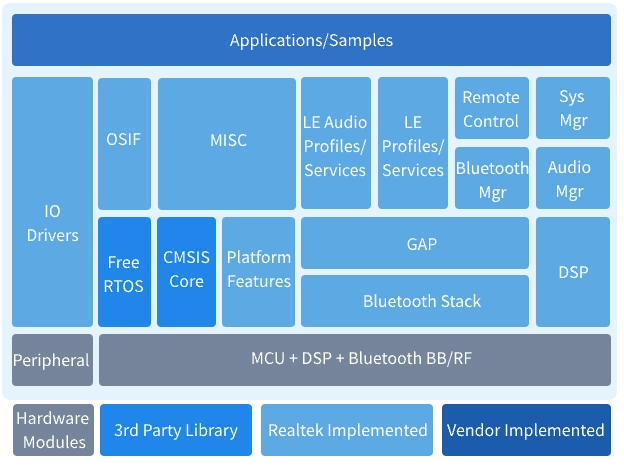
sdk img

The Realtek Dual-Mode BT SoC SDK is a software development kit specifically designed for developing Bluetooth and audio applications in embedded systems. This SDK integrates drivers, wireless protocol stacks, API documentation, sample code, and development tools, providing customers with comprehensive development support. Its high-performance Bluetooth dual-mode protocol stack fully supports traditional Bluetooth, Bluetooth Low Energy, and Bluetooth Low Energy audio technologies, making it widely applicable to various scenarios such as headphones, speakers, wearable devices, smart voice recorders, charging cases, dashboards, and more. The SDK features a rich set of APIs and examples, offering diverse software solutions tailored to multiple applications, assisting developers in quickly getting started.

Hardware Kit
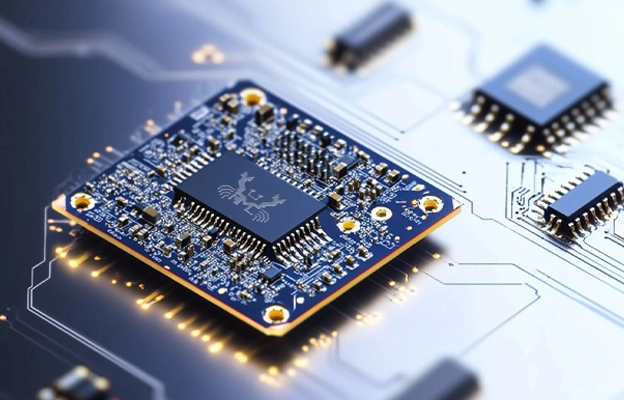
hardware kit img

Realtek's HDK is a tool designed specifically for customers to assist with hardware design planning. It includes block diagrams, schematics, hardware design guidelines, PCB layout, routing, and stackup recommendations, RF design guidelines, a hardware approved vendor list (AVL), a reference BOM, and production tools. It provides guidance from entry-level design to mass production, enabling customers to complete hardware design and testing in the shortest possible time.

Tools
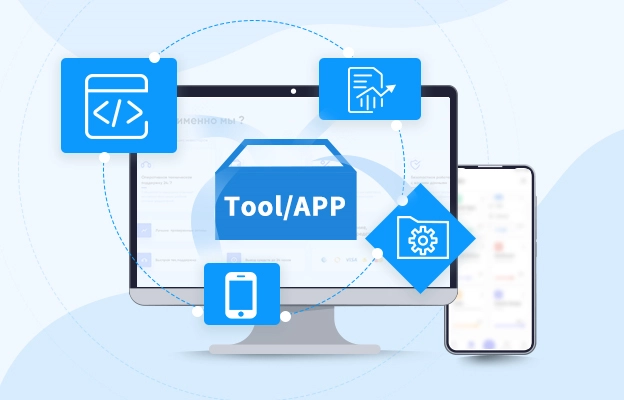
tool img

Realtek provides a comprehensive solution toolkit for developers and users, including powerful programming tools, flexible log debugging tools, configuration management tools, and smartphone applications. This toolkit aims to enhance development efficiency and product performance. It is tailored for mainstream operating systems and offers selective platform support.

Programming and Production Tools

The programming and production tools ensure quick and reliable firmware writing. Whether used by developers for firmware programming or in large-scale production for efficient processing, these tools meet all requirements effortlessly.

  • MPPG Tool: Used for RD programming and mass-production programming.
  • CFU Download Tool: Used for firmware upgrade of the chip using USB.

Log Analysis Tools 

Log analysis tools provide simple and efficient solutions for problem localization and resolution, serving as a reliable troubleshooting assistant for users.

  • Debug Analyzer: Used for SoC logging and debugging.

Configuration Management Tools

Configuration management tools simplify the configuration process to ensure that devices are operating at optimal conditions.

  • MCUConfig Tool: Used for OEM system configuration and SoC application parameter configuration.
  • DSPConfig Tool: Used for generating DSP configuration images.
  • ANC Design Tool: Used for generating ANC configuration images.
  • ANC MP Tool: Support reading ANC gain, writing ANC gain to RAM, or downloading ANC gain to Flash.

Smartphone Applications

Smartphone applications provide an intuitive mobile interface, serving both as powerful developer tools and as a personalized control center for users. Users can easily manage devices, adjust performance, and make diverse settings for an exceptional personalized experience.

  • Audio Connect APP: Support Android and iOS platforms. It offers features such as EQ tuning and hearing settings to meet the needs of audio personalization and various hearing conditions, along with button and other configurations to match individual operational habits.
  • OTA APP: Support Android and iOS platforms. It provides convenient and secure firmware upgrade services for various products.

Tools and corresponding documentation can be accessed via RealMCU. For specific functional or operational inquiries about particular tools, please refer to the official user manuals or contact Realtek technical support.

Typical Applications

OWS Headset

OWS Headset

Stereo Headset

Stereo Headset

Gaming Headset

Gaming Headset

Smart Speaker/Soundbar

Smart Speaker/Soundbar

Smart Watch

Smart Watch

Smart Charging Case

Smart Charging Case

Dashboard

Dashboard

Smart Record Pen

Smart Record Pen

Auracast™

Auracast™

Smart Helmet

Smart Helmet