Applications > Mouse & Keyboard


The high-speed tri-mode gaming mouse supports USB, 2.4G, and BLE modes to meet different usage needs. In high-speed USB and 2.4G modes, the mouse achieves an 8K polling rate, providing users with a smooth and ultra-low latency experience. Meanwhile, in BLE mode, the mouse is compatible with mainstream Bluetooth host devices on the market (such as computers), allowing for wide application.
System Structure
The Realtek RTL87x2G integrates USB 2.0 High-Speed and 2.4GHz wireless interfaces within a single-chip architecture, delivering a smooth 8K user experience with ultra-low latency. Additionally, its rich peripheral interfaces such as SPI, QDecoder, Keyscan, I2C, GPIO, and PWM enable developers to add advanced features for product differentiation while maintaining excellent power performance. The chip, combined with the mature and comprehensive Realtek SDK, development documentation, and related tools, allows developers to quickly realize their creative ideas.

Application Scenarios

Advantages of Solution

High-speed USB and 2.4G interfaces providing 8K polling rate.

Highly integrated with various peripheral interfaces such as SPI, QDecoder, I2C, PWM, GPIO, and display interfaces.

While delivering high performance, it also exhibits excellent power consumption characteristics.

BLE/2.4G/high-speed USB interfaces highly integrated on a single chip, providing product applications across various platforms.

Certified by Allion Labs and widely validated in the market.

A wide range of IC packages can be flexibly used in various applications.

A fully functional SDK development package that includes a complete product prototype project, development and testing tools, upgrade tools, production tools, etc., which reduces customer development work and accelerates project implementation.
Industry Solutions
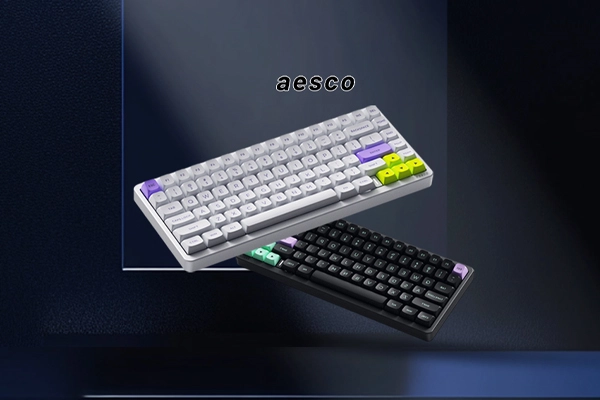
Aesco under Rapoo launches inductive switch keyboard with Realtek RTL8762GKH, supporting 8K polling rate, dual-mode connection and full-key hot swap. It features strong anti-interference and low power for gaming & professional typing.
Recommended Chips
| RTL8762GRU | RTL8762GRH | RTL8762GKU | RTL8762GKH | RTL8762GTH | RTL8772GWP | |
|---|---|---|---|---|---|---|
| MCU | CM55 125MHz | CM55 125MHz | CM55 125MHz | CM55 125MHz | CM55 125MHz | CM55 125MHz |
| Internal Flash | 4MB | 8MB | 8MB | 8MB | 8MB | N |
| SRAM | 384KB | 384KB | 384KB | 384KB | 384KB | 384KB |
| PSRAM | N | N | N | N | N | 4MB |
| BT Version | BLE 5.3 | BLE 5.3 | BLE 5.3 | BLE 5.3 | BLE 5.3 | BLE 5.3 |
| Tx Power | 14dBm | 14dBm | 4dBm | 4dBm | 4dBm | 14dBm |
| QSPI | N | N | Y | Y | Y | Y |
| GPIO (max) | 14 | 14 | 31 | 31 | 47 | 58 |
| ADC | 4 | 4 | 5 | 5 | 6 | 6 |
| SPI | SPI0: 10MHz SPI1: 10MHz | SPI0: 10MHz SPI1: 10MHz | SPI0: 50MHz SPI1: 10MHz | SPI0: 50MHz SPI1: 10MHz | SPI0: 50MHz SPI1: 20MHz | SPI0: 50MHz SPI1: 20MHz |
| USB | Full Speed | High Speed | Full Speed | High Speed | High Speed | High Speed |
| Package (mm) | QFN32, 5×5 | QFN32, 5×5 | QFN48, 6×6 | QFN48, 6×6 | QFN68, 7×7 | QFN88, 10×10 |




 苏公网安备32059002006558号